
Tuesday, November 29, 2011
VOCAB Assignment:Tracy Haines, Stroll Along Platte, May 4 2010 (published in her blog)
complementary color scheme: Colors that are opposite each other on the color wheel are considered to be complementary colors (example: red and green). The high contrast of complementary colors creates a vibrant look especially when used at full saturation. This color scheme must be managed well so it is not jarring. Complementary colors are tricky to use in large doses, but work well when you want something to stand out.

VOCAB Assignment: Henri Matisse, Magnolia, c. 1900
contour line: Contour means "outline", and presents exterior edges of objects. A plain contour has a clean, connected line, no shading and emphasizes an open "shell" of the subject. More complex contours can imply shading values through interior outlines, may have line textures or be contrasted with mixed media. Pencil drawing, ball point pen and black markers are good practice tools.

VOCAB Assignment: Giovanni Baglione, Sacred and Profane Love, 1602-1603
chiaroscuro: Chiaroscuro in art is "an Italian term which literally means 'light-dark'. In paintings the description refers to clear tonal contrasts which are often used to suggest the volume and modelling of the subjects depicted".

Further specialized uses include chiaroscuro woodcut, for colored woodcuts printed with different blocks, each using a different coloured ink; and chiaroscuro drawing for drawings on colored paper with drawing in a dark medium and white highlighting. Similar effects in the lighting of cinema and photography are also chiaroscuro.
VOCAB Assignment: Jan van Eyck, The Arnolfini Portrait, 1434
pentimento: A pentimento (plural pentimenti) is an alteration in a painting, evidenced by traces of previous work, showing that the artist has changed his mind as to the composition during the process of painting. The word derives from the Italian pentirsi, meaning to repent. 
Among other changes, his face was higher by about the height of his eye, hers was higher, and her eyes looked more to the front. Each of his feet was under drawn in one position, painted in another, and then overpainted in a third. These alterations are seen in infra-red reflectograms.
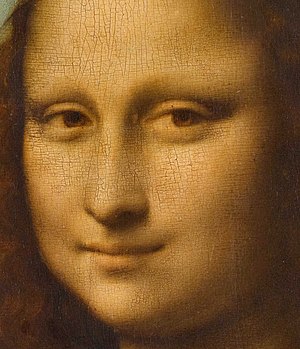
VOCAB Assignment: Leonardo da Vinci, Mona Lisa, c. 1503-1505
Sfumato: Sfumato is one of the four canonical painting modes of the Renaissance (the other three being Cangiante, Chiaroscuro, and Unione)

The most prominent practitioner of sfumato was Leonardo da Vinci, and his famous painting of the Mona Lisa exhibits the technique. Leonardo da Vinci described sfumato as "without lines or borders, in the manner of smoke or beyond the focus plane."
Wednesday, November 9, 2011
Matisse Painting




Subscribe to:
Posts (Atom)